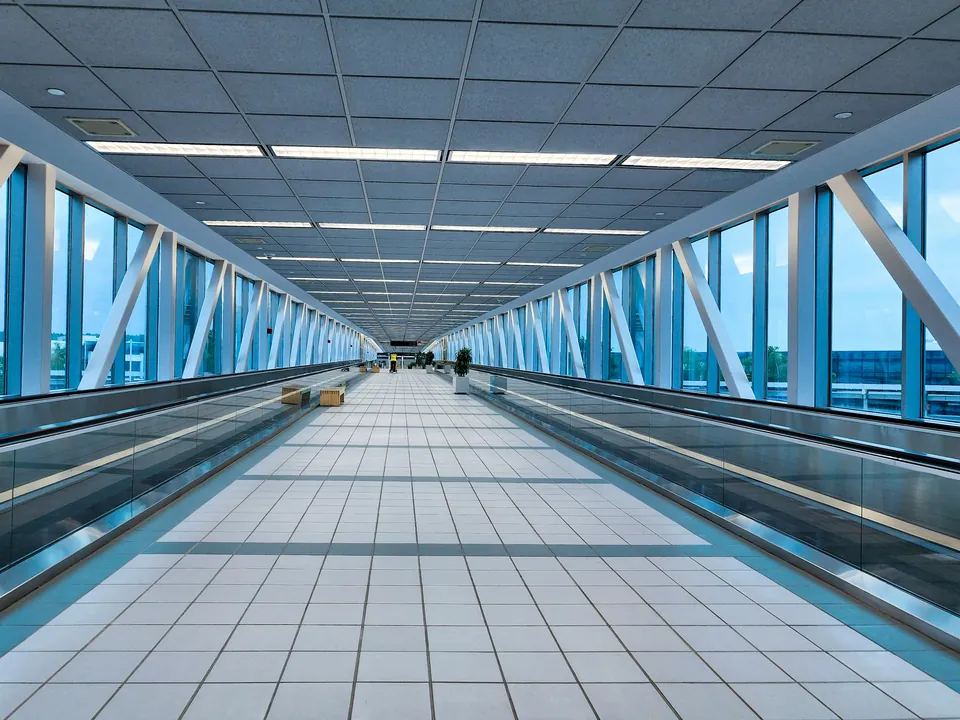
Long walks through the terminal, steps up to the plane, narrow aisles on board: for people who are not steady on their feet, a flight can be tiring. There is a good solution. At all airports in the EU, travellers with a disability or reduced mobility are entitled to free assistance, from the terminal entrance to their seat on the plane. For everything to work, booking it in time matters most.
Who can use the assistance
It is not only meant for wheelchair users. It is open to everyone who cannot get around the airport without help, for example after an operation, in old age or with a walking aid. Impaired sight or hearing and conditions that are not visible count too. You do not need a certificate.
What the assistance covers
| Service | What applies |
|---|---|
| Help in the terminal | From the meeting point through check-in and security to the gate |
| Boarding | By wheelchair, lift or carry chair to your seat |
| Changing planes | Help getting to your connecting flight |
| Arrival | From the plane through passport control and baggage reclaim to the exit |
| Mobility aids | Wheelchair, rollator and walking aids carried free of charge |
| Assistance dogs | Travel free of charge in the cabin |
Assistance is free at airports in the EU and on flights departing from the EU, whichever airline you fly with. On return flights from countries outside the EU, whether and how you are helped depends on the airport and the airline.
How to book assistance
Tell the airline or tour operator at least 48 hours before departure, ideally when you book. They pass the information on to the airports. Describe as precisely as possible what help you need.
Airlines usually distinguish three levels. Some travellers can manage short distances and steps but not the long walks in the terminal. Others cannot climb stairs. A third group cannot move on their own and need to be carried to their seat. The more precise your details, the better the airport can plan.
Wheelchair and rollator
You can usually use your own wheelchair right up to the plane. At the door it is loaded and travels in the hold. After landing it is brought to the aircraft door or to baggage reclaim. Ask where you will get it back, and let staff take you there in an airport wheelchair.
Electric wheelchairs have special rules for their batteries. When booking, give the battery type and its watt-hours. Lithium batteries often have to be removed and carried in the cabin. Attach short instructions for switching off and dismantling the wheelchair to it. That helps staff when loading.
A wheelchair is expensive and, for many people, irreplaceable. The airline is liable for damage, but only up to a maximum amount. For expensive models you can declare a higher value before the flight, for an extra charge. Photograph the wheelchair before handing it over and report any damage at the airport straight away.
On board
The crew help you stow your hand luggage and sit down. Many aircraft carry a narrow aisle wheelchair to get you to the toilet. Ask for it if you need it. When choosing a seat, rows near the toilets help. Seats by the emergency exits are not allowed for travellers with reduced mobility.
Hidden disabilities
People with autism, dementia or an anxiety disorder, for example, can also get help at the airport. Many airports offer a lanyard with sunflowers that you can wear. It shows staff that you may need more time or patience, without you having to explain anything. Ask for it at the information desk.
Tips for the journey
- Choose direct flights: every change of plane is one more transfer.
- Allow enough connection time: with an escort, getting around often takes longer.
- Medicines in hand luggage: with a doctor’s letter if you need syringes or liquids.
- Get the booking confirmed: a few days before the flight, ask whether the assistance has been noted.
- Complain if something goes wrong: report problems to the airport and the airline in writing.
flug-123.de editorial team, updated 10 November 2026. We review our guides regularly. Rules can change. If in doubt, the details in your booking apply.