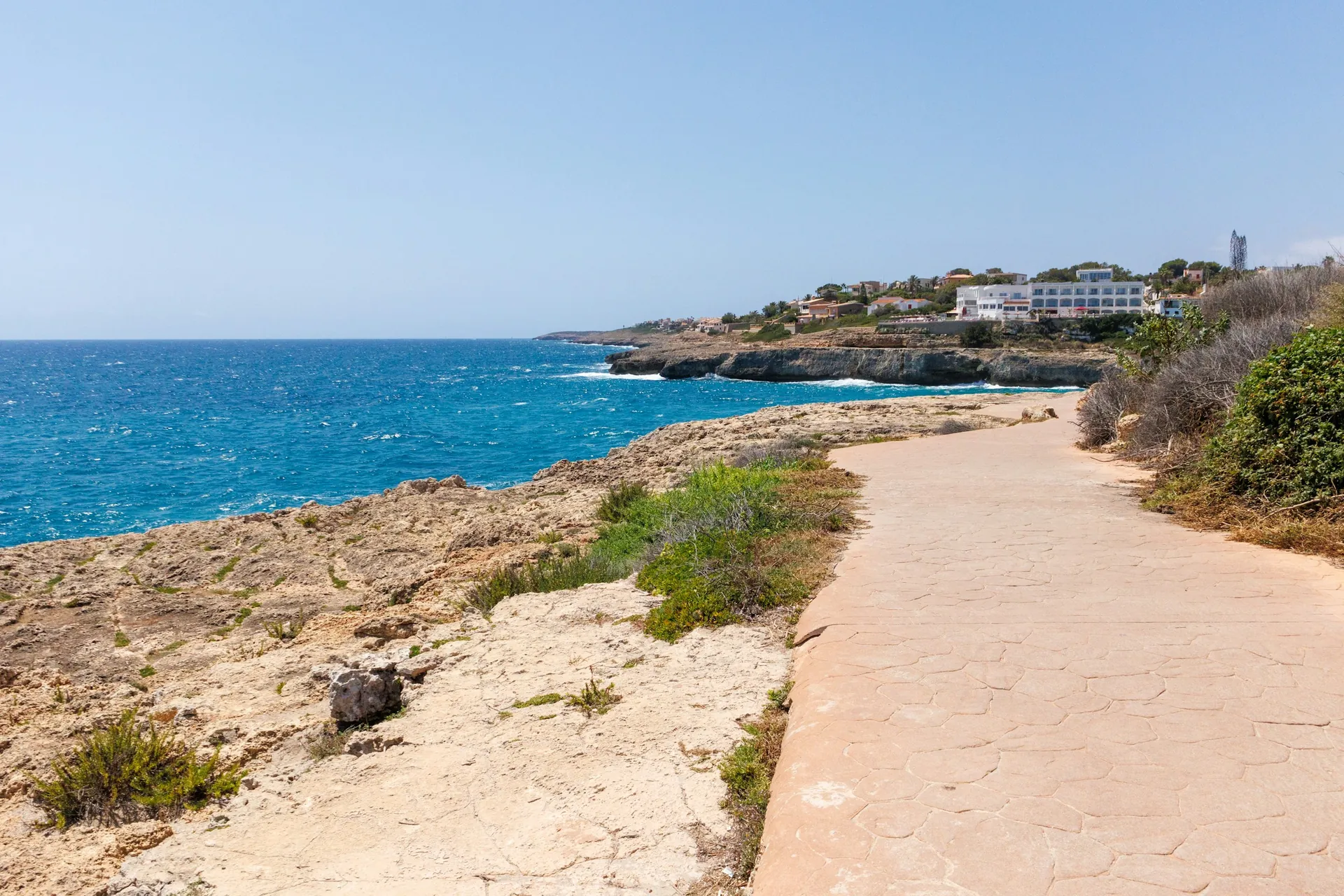
Mallorca has long sandy beaches, but the island is at its most beautiful in its small coves. Mallorcans call them calas: narrow inlets in the rock, often with pale sand, pine trees along the shore and water in every colour from turquoise to deep blue. Most are on the east coast and in the south, with a few hidden gems in the north and west too.
The most beautiful coves at a glance
| Cove | Location | Good for |
|---|---|---|
| Caló des Moro | Southeast, near Santanyí | Photos, snorkelling, early morning |
| Cala Mondragó | Southeast, nature park | Families, calm water, walking |
| Cala Llombards | Southeast | Small sandy cove, fishermen’s huts |
| Es Trenc | South | Long natural beach, shallow water |
| Cala Varques | East, near Manacor | Natural cove with no road |
| Cala Agulla, Cala Mesquida | Northeast, near Cala Ratjada | Wide bays, dunes |
| Platja de Formentor | North | Pines down to the water, boat trip |
| Cala Deià | West | Shingle cove, fish restaurant |
The southeast: postcard views
The most famous is Caló des Moro. High rocks enclose a small patch of sand, and the water glows so turquoise that it looks almost unreal. From the car park it is about a quarter of an hour’s walk down. The cove is very small and already full by mid-morning in summer. Come early and you will have it almost to yourself. It is worth it.
Not far away lies Cala Mondragó in a nature park: two coves with pale sand and calm water, surrounded by pines and walking paths. It is ideal for families because the water shelves gently. In summer there are sun loungers, parasols and a small bar.
Cala Llombards is a narrow sandy cove between rock walls, with small fishermen’s boathouses at its edge. If you want to snorkel, you will find clear water and plenty of fish by the rocks.
Es Trenc: Mallorca’s Caribbean
In the south, Es Trenc stretches for several kilometres. The beach is unspoilt, with dunes and salt pans behind it. The water is shallow and pale turquoise, and on calm days it is reminiscent of the Caribbean. Nothing is built here apart from a few simple beach bars. The car parks charge a fee.
The east and northeast
Many smaller calas line the east coast, some in resorts, others completely unspoilt. Cala Varques can only be reached by a footpath of about twenty minutes. In return there are no buildings, just rocks, pale sand and clear water in which, on calm days, you can see right to the bottom and watch small shoals of fish between the rocks.
In the northeast near Cala Ratjada lie Cala Agulla and Cala Mesquida. Both are larger, with fine sand and dunes behind. In a north wind there can be waves here, which are fun for children but can be dangerous for weak swimmers.
The north and west
Platja de Formentor lies on the peninsula of the same name in the north. Pines grow almost down to the water, and across the water you can see the bay of Pollença. You reach the beach by a winding road or by excursion boat from Port de Pollença. In summer the road is sometimes closed to cars, and then buses run instead.
On the steep west coast, sand is rare. Little Cala Deià below the artists’ village of Deià is a shingle cove with clear water and a well-known fish restaurant on the rocks. Water shoes help.
Tips for a beach day
- Set off early: at the well-known coves, car parks are often full before ten in summer.
- Allow for parking fees: parking costs a few euros at many popular beaches.
- Take water and shade: unspoilt coves often have neither a bar nor parasols.
- Wear sturdy shoes: the paths down to the calas are sometimes steep and stony.
- Use the shoulder season: in May, June and September the water is warm and the coves are quieter.
flug-123.de editorial team, updated 10 November 2026. We review our guides regularly. Rules can change. If in doubt, the details in your booking apply.


